Best Slot, Live & Sports Casino (Original Royalewinmalaysia)

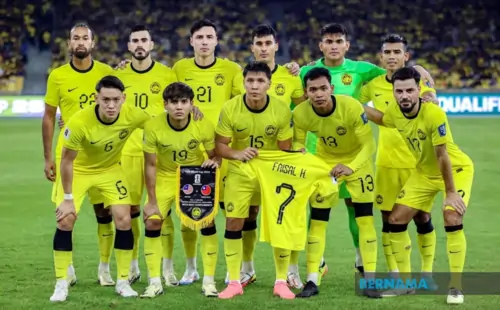
The Malaysia National Football Team, popularly known as Harimau Malaya (the Malayan Tigers), is the official representative of Malaysia in international men’s football. Governed by the Football Association of Malaysia (FAM), the team competes in regional and global competitions under the FIFA code MAS.
History and Identity Malaysia National Football Team
The roots of Harimau Malaya trace back to the Malaya national football team, which competed in regional tournaments before the formation of modern Malaysia in 1963. FIFA and historical records recognise the current Malaysia side as the successor of the defunct Malaya team, inheriting its legacy, honours, and past results at competitions such as the early AFC Asian Cups.
The national team’s nickname — Harimau Malaya — symbolises intensity, courage, and national pride, and it has become a core part of Malaysia’s sporting identity both on and off the pitch.
Recent Resurgence and Coaching Era
After a period of inconsistent results, Malaysia entered a new phase of resurgence in the early 2020s. In January 2022, South Korean coach Kim Pan-gon was appointed head coach, bringing a more modern, organised playing style and higher standards in conditioning and analysis.
Under Kim, Malaysia recorded key wins in AFC Asian Cup 2023 qualifying, including a 3–1 victory over Turkmenistan that helped secure qualification for the Asian Cup on merit for the first time since 1980. At the final tournament in Qatar, Malaysia exited at the group stage but produced a memorable 3–3 draw against favourites Korea Republic, coming from behind and equalising in stoppage time in one of the standout matches of the group phase.
Kim stepped down from the national role in 2024, after which Pau Martí briefly took over in a caretaker capacity while FAM prepared the next phase. Peter Cklamovski was then appointed as head coach in late 2024 to lead the project toward the 2027 AFC Asian Cup, signalling continuity in high-intensity, proactive football.
A crucial factor behind this resurgence has been the rise of Johor Darul Ta’zim (JDT) as the dominant club in Malaysian football, with strong infrastructure, modern coaching, and regular AFC competition. Many key national team players, including stars like Arif Aiman, have developed within JDT’s system, creating tactical familiarity and a higher baseline of professionalism when they step into the national setup.
Players and Squad Profile
The current Harimau Malaya squad blends experienced leaders with emerging talent from both domestic leagues and overseas clubs.
- Arif Aiman has become one of the faces of the new era, operating as a winger or attacking midfielder with pace, creativity, and a direct dribbling style that often unlocks tight defences. His performances for JDT and the national team have made him a symbol of Malaysia’s attacking evolution.
- Syihan Hazmi has established himself as a trusted presence in goal, providing calm shot-stopping and improved distribution from the back, which suits Malaysia’s more proactive approach.
- Defenders such as Dion Cools and Matthew Davies offer international experience, tactical discipline, and leadership in the back line, helping Malaysia compete more consistently against higher-ranked opponents in Asian competition.
The 2025–26 squad pool features a mix of domestically based stars—many from JDT’s highly professional environment—and internationally experienced professionals, reflecting Malaysia’s effort to widen its talent pipeline and align club and country playing philosophies.
Naturalisation, Eligibility, and Governance
Alongside on‑field progress, Malaysia has also faced complex off‑field challenges. In 2025, the national team became embroiled in a high‑profile eligibility controversy when seven foreign-born players were sanctioned by FIFA over alleged irregularities in their naturalisation documentation, prompting questions about administrative processes and compliance.
The Court of Arbitration for Sport (CAS) subsequently granted a temporary suspension of the sanctions pending a full hearing, which allowed the affected players to continue representing Malaysia while the case is being resolved. This episode has sparked widespread debate inside Malaysia about the role of heritage and naturalised players, the meaning of national identity in sport, and how strictly football associations must interpret and apply evolving FIFA eligibility regulations.
Performance, Ranking, and Outlook
Harimau Malaya regularly compete in FIFA World Cup qualifiers, AFC Asian Cup qualifiers, and regional tournaments such as the AFF Championship, where they have shown that they can challenge traditional Southeast Asian powers when in form.
Malaysia’s international standing has improved compared with previous decades, reflected in a climb up the FIFA rankings during the early 2020s and more competitive performances against regional rivals and higher‑ranked Asian sides. The focus of the current cycle is qualification and strong performance at the 2027 AFC Asian Cup, with Malaysia placed in an AFC qualifying group where they have begun building a solid record and are viewed as credible contenders for a place at the finals.
While Harimau Malaya are still in the process of closing the gap to Asia’s established heavyweights, their trajectory under successive modern coaches, the backbone provided by clubs like JDT, and the integration of both local and foreign‑born talent suggest a team on an upward curve rather than one satisfied with regional mid‑table status.
Conclusion
The Malaysia National Football Team remains one of the country’s strongest symbols of national pride. With a rich historical legacy, a passionate fanbase, and renewed focus on coaching, infrastructure, and player development, Harimau Malaya are steadily positioning themselves as a formidable contender in Southeast Asia and an increasingly respected competitor across Asia.
Visit royalewinmalaysia Site For More!

Emelie Dy is an experienced content writer specializing in games, news, and in-depth reviews for Royalewinmalaysia. With over five years of experience in the gaming industry, she creates accurate, engaging, and easy-to-understand content that helps players navigate game features, strategies, and platform details. Her work focuses on delivering reliable insights, practical guides, and honest reviews to support informed and enjoyable gaming experiences.